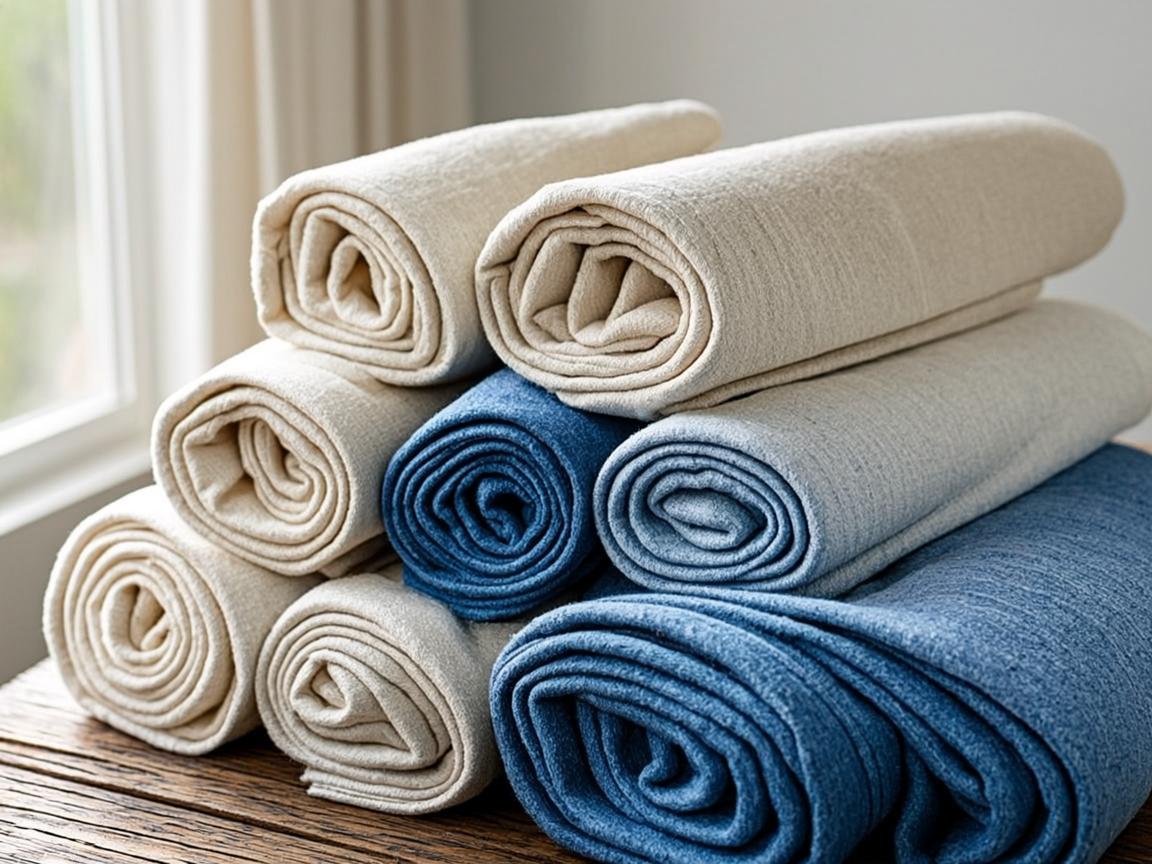
Blended Fabric Wholesale for UAE — Shade-Matched Lots from Surat
Wholesale blended fabric lots for Dubai trading housess — shade-matched, roll-count packed and held to one standard across repeat containers.
Wholesale blended fabric supply works on one contract: the lot you buy this month is the lot you can sell for the next six. Blending is where cost engineering actually happens — a two-percent yarn change can rescue a programme margin without the shelf ever noticing.
Our blending desk quotes three constructions for most briefs: the one you asked for, the one that performs better, and the one that costs less for the same hand-feel. That is the standard our wholesale lots are packed against.
Wholesale blended fabric supply, structured properly
- Shade-matched wholesale lots with retained standards on file for every account
- Roll-count packing that suits wholesale breaking — clean faces, accurate meterage
- Volume tiers structured honestly so the second container costs less than the first
- Fast-moving constructions held in rolling stock for the reorder rhythm
The fabric itself
- Weight range: 80 GSM to 300 GSM across blends
- Constructions: plains, twills, satins and dobbies
- Typical end uses: cost-engineered programmes across uniforms, thobes, abayas and dressmaking
- Widths: 44”, 58” and 72” depending on construction
- Finishing: dyed, printed, embroidered or plain, with soft-flow and sanforised options
Holding consistency across wholesale volumes
Demand moves with year-round — blends are the calibration tool of every serious programme in the UAE. Wholesale buyers who lock allocation a season ahead get the first dispatch slots; spot purchasers get what remains. UAE buyers think in re-export terms: one consignment serves their own boutiques, their GCC wholesale customers and their East Africa trade in a single landed cost calculation.
How wholesale accounts open
- First container: mixed constructions under one invoice — the full blended fabric range tested at once
- Second container: winners reordered in depth, shade-matched to the first lot from our retained standards
- Continuing: scheduled monthly or quarterly dispatches with reserved loom capacity and buffer stock of agreed bases
- Review: lot references carried on every packing line so both sides can trace any roll back to its dye run
Shipping to UAE — the practical details
Every UAE order ships with complete export documentation prepared by our own team. Sea freight runs via Jebel Ali and Sharjah Container Terminals for volume orders; air freight covers festival windows. Payment terms are discussed openly at enquiry stage — most first orders run on advance or letter of credit, relaxing as the relationship settles.
Open a wholesale blended fabric account
Send your blended fabric wholesale uae requirement across — quantities, shades, widths and the season you are planning for. The desk responds with costing, lead times and the sampling path, because a first order built on verified samples is the only first order we are interested in.
Blended Fabric Wholesale for UAE — what our mill-direct programme covers
The fabric programme behind this page is mill-direct Surat supply — weaving, dyeing, printing and finishing under one accountable desk, serving UAE with the construction discipline that serious fabric buyers audit for. We develop and run natural fibres, regenerated cellulose, synthetics and the blend families between them, across the weight bands and finishes the trade actually specifies.
What that means practically: cotton programmes from voile-light shirting through canvas-heavy utility weights, silk and art-silk registers for the premium trade, the full polyester and nylon range from challis to technical constructions, and the fashion fabric families — georgette, crepe, satin, velvet, organza, jacquard, brocade — that garment programmes cut from. Printed, dyed, embroidered and textured finishes run on the same programme.
Bulk fabric supply runs on spec discipline: GSM tolerances held across the run, shade cards matched and archived per buyer, width options in the trade standards, and lot-level documentation that travels with the shipment. Development sampling moves in days because the clusters are local — the speed advantage that built this city's fabric trade still shows up in every programme we quote.
- Cotton fabrics — the workhorse range
- Silk fabrics — premium register
- Georgette, chiffon and crepe — drape family
- Printed fabrics — print cluster collections
- Finished garments — what the fabric becomes
Fabrics behind the range
Fabric engineering is weight, weave and finish discipline:
The fabric ladder runs from voile-light summer cloths through mid-weight Challis and poplin families, the suiting and shirting weights, and up to canvas and heavy furnishing constructions. Natural fibres cover the comfort trade; regenerated cellulose — viscose, modal, the Tencel family — carries the drape-led programmes; synthetics hold the technical and price-disciplined tiers.
Finish determines shelf behaviour as much as the base cloth does. The same 100 GSM cotton reads crisp or soft depending on mercerising; the same georgette drapes clean or stiff depending on the finishing heat profile. We hold those finish specs on file per buyer, because reorder drift in finish is as damaging as shade drift — and both are preventable with archived standards.
The Surat advantage — a short history
Ask any Indian textile trader where the country's fabric decisions get made, and the answer is a Surat trading floor, not a boardroom in Mumbai. The city handles a volume of polyester filament fabric that ranks among the largest concentrations of man-made textile production anywhere in the world, and the numbers translate into something a buyer feels directly: faster development, faster sampling, faster correction.
The cluster grew in layers. Weaving came first, then process houses for dyeing and printing, then embroidery units importing multi-head machines, then stitching units and finally the export consolidation logistics that now move thousands of cartons a week through Nhava Sheva and the air cargo terminals. Each layer sharpened the one before it — printers learned what weavers could hold, embroiderers learned what printers could register.
That layered competence is why a buyer sourcing from Surat gets options rather than constraints: if one construction does not hit the spec, three alternative looms are within reach of a phone call. We write our pages from inside that network, and the history behind it is really an argument about why the location itself works in your favour.
About Ajmera Export — the brand behind this page
The desk behind this page answers its own enquiries — no agent layer, no trading-company blur. When you message Ajmera Export about a programme, the reply comes from someone who can walk onto the production floor the same afternoon and check the detail you asked about. That directness is unusual in international textile trade, and it is the main reason buyers who start with a trial lot tend to still be with us years later.
Our programmes span the ethnic wear wardrobe — women's, men's and kids — the home textile line in towels and bedding, and the fabric trade that Surat's mills are globally known for. Development happens fast because the clusters are local: sampling in days, strike-offs within the week, production slotted honestly against real capacity rather than optimistic promises.
Commercially, we keep the structure simple: MOQs that respect where a buyer is today rather than where a supplier wishes they were, private labelling available from the first order, and a claims process that resolves on evidence instead of argument. The result our buyers care about — the one we build everything around — is that the reorder looks exactly like the approval sample, every time.
Why businesses choose us
- Sampling in days from local clusters — development speed is the first thing Surat buyers notice
- Staged quality inspections with reports travelling inside the shipment, not after it
- Festival-calendar planning help — we flag order-by dates that protect your seasonal sell-through
- Container consolidation across categories to pull freight cost per piece down
- Claims resolved on photographs and lot numbers within 15 days, not on argument
Start your first order
Start the way most of our long-term buyers did: send one enquiry with what you stock today and where you want to take the programme. We reply with constructions or styles that fit your shelf, a counter-sample plan, and MOQ levels matched to your current volumes. Samples ship within days, approvals happen on your timeline, and the first production slot is booked the day you sign the strike-off.
The enquiry form on this page reaches the export desk directly, and WhatsApp works just as well for buyers who prefer trading-floor speed. Either way, the conversation that follows is a working one — spec, quantity, lead time, packing — not a brochure exchange.
Frequently Asked Questions
What is the minimum order quantity for blended fabric wholesale uae?
MOQs are flexible and depend on the construction — most fabric programmes start around 500 to 1,000 metres per shade for stock bases, and higher for custom-dyed or custom-woven lots. Mixed shipments combining several constructions in one container are routine for our buyers, so you can build a full fabric programme without over-committing to a single item.
How long does delivery to UAE take?
Stock constructions dispatch within a week, and sea freight transit to Jebel Ali and Sharjah Container Terminals typically adds three to four weeks depending on sailing schedules. Air freight is available when you need to catch a retail window — tell us your deadline at enquiry stage and we will quote the realistic option, not the optimistic one.
Can you match the fabric we already buy?
Yes — send us a cutting of your current fabric and we will analyse weight, construction and finish, then send back a matched sample for your approval before any order is confirmed. This is the most common way buyers start with us, and it protects you from the classic switching risk of a new supplier.
Featured Range
Products for UAE