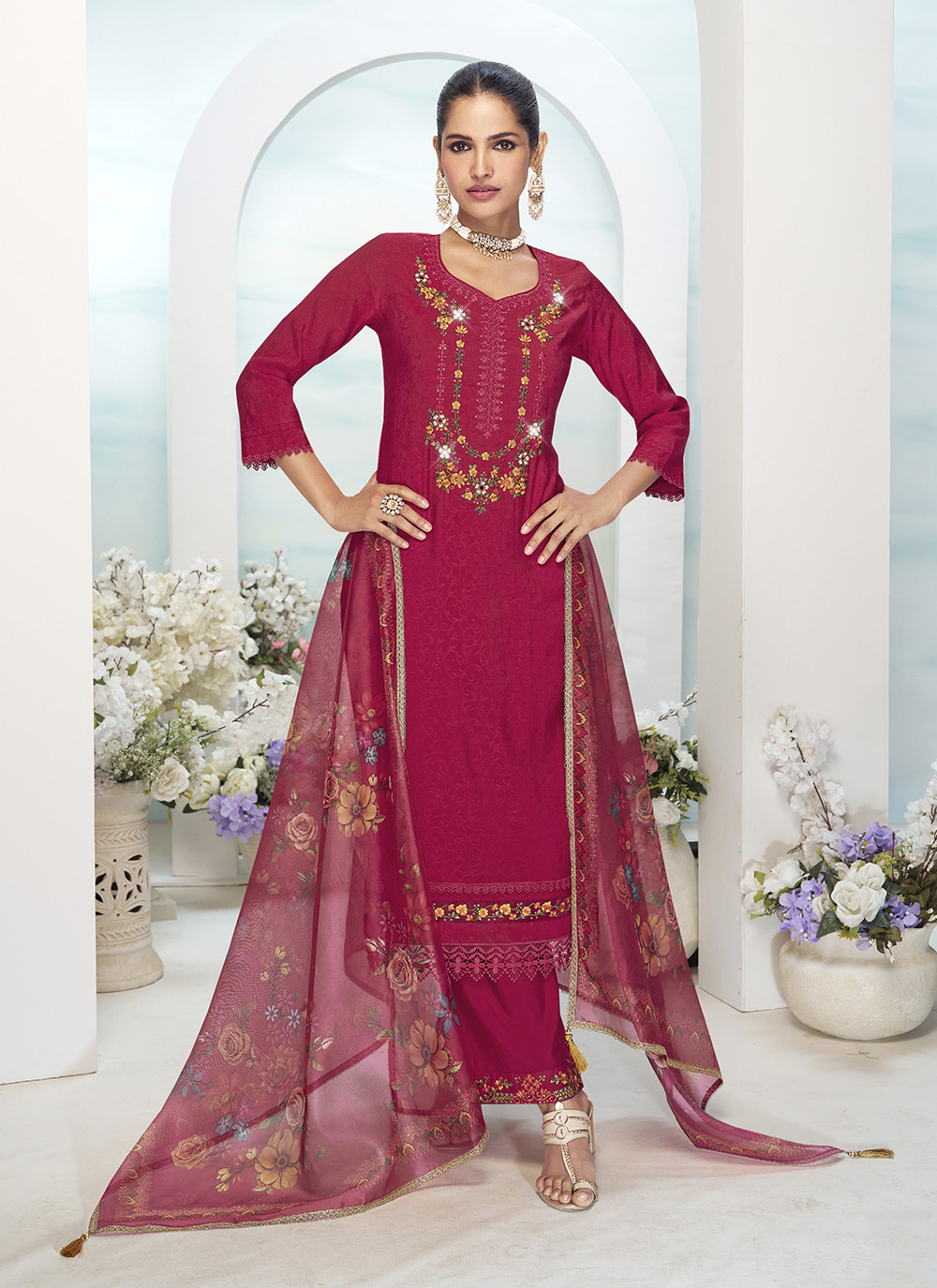
A boutique chain in Manchester asked three suppliers for "medium cotton" and received three completely different fabrics. One sent 90 GSM lawn, one sent 130 GSM poplin, one sent 180 GSM twill. All three were technically correct, and that is exactly the problem. "Medium" is not a specification. GSM is, once you know how to read it, where it hides surprises, and where it fails you as a sole spec.
What GSM Actually Measures (and How to Check a Roll Yourself)
GSM is grams per square metre of finished fabric. Mills and inspection floors measure it with a circular cutter, a die that punches a precise 100 square centimetre swatch, weighed on a calibrated digital balance. We take three to five cuts across the width and along the length, because fabric is heavier near the selvedge and at the loom's beginning and end of a roll.
You can run the same check on your counter without a lab. Cut a 10 cm by 10 cm square, weigh it in grams, multiply by 100. Or weigh a full linear metre: one running metre of fabric weighs GSM multiplied by width in metres. A 44-inch roll of 120 GSM cotton works out to roughly 134 grams per metre. If your supplier's "120 GSM" metres are weighing wildly off that number, you have a conversation to have.
One caution from our floor: cotton holds moisture, around 8 percent regain under normal conditions, and quite a bit more during the Gujarat monsoon between June and September. A roll weighed in an unconditioned warehouse in August can read a few grams heavier than the same roll in an air-conditioned inspection room. Nobody should be fighting over three GSM in peak humidity. Put the measurement method in the spec and this argument disappears.
The Weight Map: What Each Range Actually Does
Our buyers ask for a mental map more than anything else. This is the one we sketch on paper during meetings.
- 30–60 GSM: mulmul, muslin and fine voile. Scarves, saree blouses, linings, summer dupattas. Beautiful, fragile, and unforgiving in repeated machine washes.
- 60–100 GSM: lawn and cambric. Summer kurtis, kids' wear, hand-block print bases. This is the weight band where Indian summer programmes live.
Knits are quoted in GSM even more than wovens, and the numbers mean different things: single jersey runs 120–180 GSM, interlock 200–260 GSM. If you buy knitted cottons, learn the knit numbers separately. They do not translate.
Why Two Fabrics at the Same GSM Can Feel Completely Different
Here is the part first-time buyers learn the hard way. GSM is an outcome, not an input. A mill can hit 120 GSM with many different yarns, and the resulting fabrics will not feel like relatives.
A 120 GSM fabric spun from combed 40s count yarn is thin, dense and smooth. A 120 GSM fabric from carded 20s yarn is bulkier, fuzzier, and pills after a handful of washes. Both weigh the same. Only one of them belongs in a premium kurti programme.
Four variables sit behind the number:
- Yarn count and spinning: combed removes short fibres, which is why combed cottons pill noticeably less in our wash tests. Ring-spun is the garment standard; open-end yarn is cheaper, weaker, and mostly belongs in towels and denim.
- Weave: plain weave is smooth and stable; a 2/2 twill drapes better and resists abrasion more but shows a diagonal sheen; hopsack (basket weave) feels airy and open but frays faster at cut edges; leno weaves hold a deliberately open gauze structure steady for sheers.
So write the spec as fibre, count, combed or carded, EPI/PPI, weave, finish, and GSM with tolerance. A supplier who balks at that level of detail on a repeat order is telling you something worth hearing.
Greige Weight, Finished Weight, and the Tolerance That Saves Arguments
The loom-state roll, what the trade calls greige, carries sizing starch and natural impurities. Scouring and bleaching strip that out, and finished GSM typically comes in a few percent under greige. Then washing enters the picture from the other direction: a fabric that shrinks is physically denser after shrinkage, so a 120 GSM cotton that shrinks about 5 percent in area will measure close to 126 GSM after its first wash. Both numbers are honest. Only one of them is in your contract.
This is why we ask buyers one direct question on every cotton programme: do you want the GSM measured at delivery, or after one wash? For cut-and-sew garment programmes, after-wash is the safer number because that is what your customer actually wears. Write the tolerance in too. Plus or minus 5 percent is a normal industry tolerance; plus or minus 3 is a premium-contract tolerance and you should expect to be asked why you need it.
For weaving defects, the four-point inspection system is the accepted standard on export floors, including ours. Ask for the inspection grade, not just the GSM sheet.
Shrinkage, Sanforising, and What Washing Really Does
Loomstate cotton can shrink 3 to 7 percent in its first wash, which quietly destroys garment measurements if nobody planned for it. Sanforised fabric, mechanically pre-shrunk at the finishing stage, holds shrinkage to around 2 percent or less. Garment-washed fabric is softer and even more stable, at the cost of a slightly lived-in look from day one.
Our standard practice on first orders: we wash a swatch three cycles at 40 degrees, re-measure dimensions and GSM, and send the report with the shipment documents. It costs us a day. It has saved more buyer relationships than any other single habit, because the fabric that arrives is the fabric that was promised after laundering, not just on paper.
GSM and Your Container
Heavier fabric is simply more kilograms per metre, and containers have two ceilings: volume and payload. A 20-foot container of fine voile cubes out long before it gets heavy. A heavy canvas programme hits its weight ceiling with space left over, so freight is effectively paid per kilogram. When you plan a mixed programme, heavy cottons and sheers balance a container better than either does alone. It is basic arithmetic, but we see new buyers discover it only after their first heavy-weight order.
Packing follows weight too. Heavy cottons travel rolled and bale-packed; lighter dress cottons fold into 5-ply export cartons. The carton and roll plan belongs in your order confirmation, not in the shipping agent's imagination.
Frequently Asked Questions
What GSM cotton is best for kurtis?
For a year-round straight kurti, 100–140 GSM in a combed poplin or twill is the dependable band. Summer-only programmes can drop to 80–110 GSM lawn. Winter and embroidered kurtis sit better at 150–200 GSM because the weight carries the work without collapsing.
Is higher GSM always better quality?
No, and this misunderstanding costs people money. GSM is fitness for purpose, not a quality score. A 60 GSM voile in fine combed yarn is a higher-grade fabric than a rough 200 GSM carded duck. Quality lives in the yarn, the weave, and the finishing.
What GSM should I order for bedsheets and home linen?
Woven cottons around 120–160 GSM are the standard bedsheet band. Heavier 180–220 GSM constructions suit premium and hotel-weight linen. Below 100 GSM feels flimsy for bedding; above 250 GSM you are in canvas territory.
How much GSM variation should I accept between rolls?
Plus or minus 5 percent across a shipment is normal and within standard tolerance. Within a single roll, a few grams between centre and selvedge is unavoidable. Anything beyond that band deserves a claim, backed by cut-and-weigh evidence.
Does GSM change after washing?
Yes, slightly, mostly through shrinkage. A fabric that shrinks becomes denser and can measure a few grams per square metre higher after the first wash. Weigh the same swatch before and after a wash cycle and you will see it plainly.
Can I verify GSM without a lab or special tools?
You can. Cut a 10 cm square, weigh it in grams, multiply by 100. Or weigh a full linear metre and divide by the width in metres. Neither method replaces a calibrated cutter for a claim, but both catch a mis-declared roll before it becomes a shipment dispute.
If a cotton programme is on your list for the coming season, send us the garment, the market, and the season it ships in, and we will come back with the weight, weave and tolerance we would run ourselves. Serious buyers get our cotton swatch card with GSM written against every base, plus washed and unwashed samples on request. Message us on WhatsApp or raise an enquiry and we will start there.
Sourcing ethnic wear for your business?
Our export team shares catalogues, MOQ and pricing tailored to your market — response within one business day.