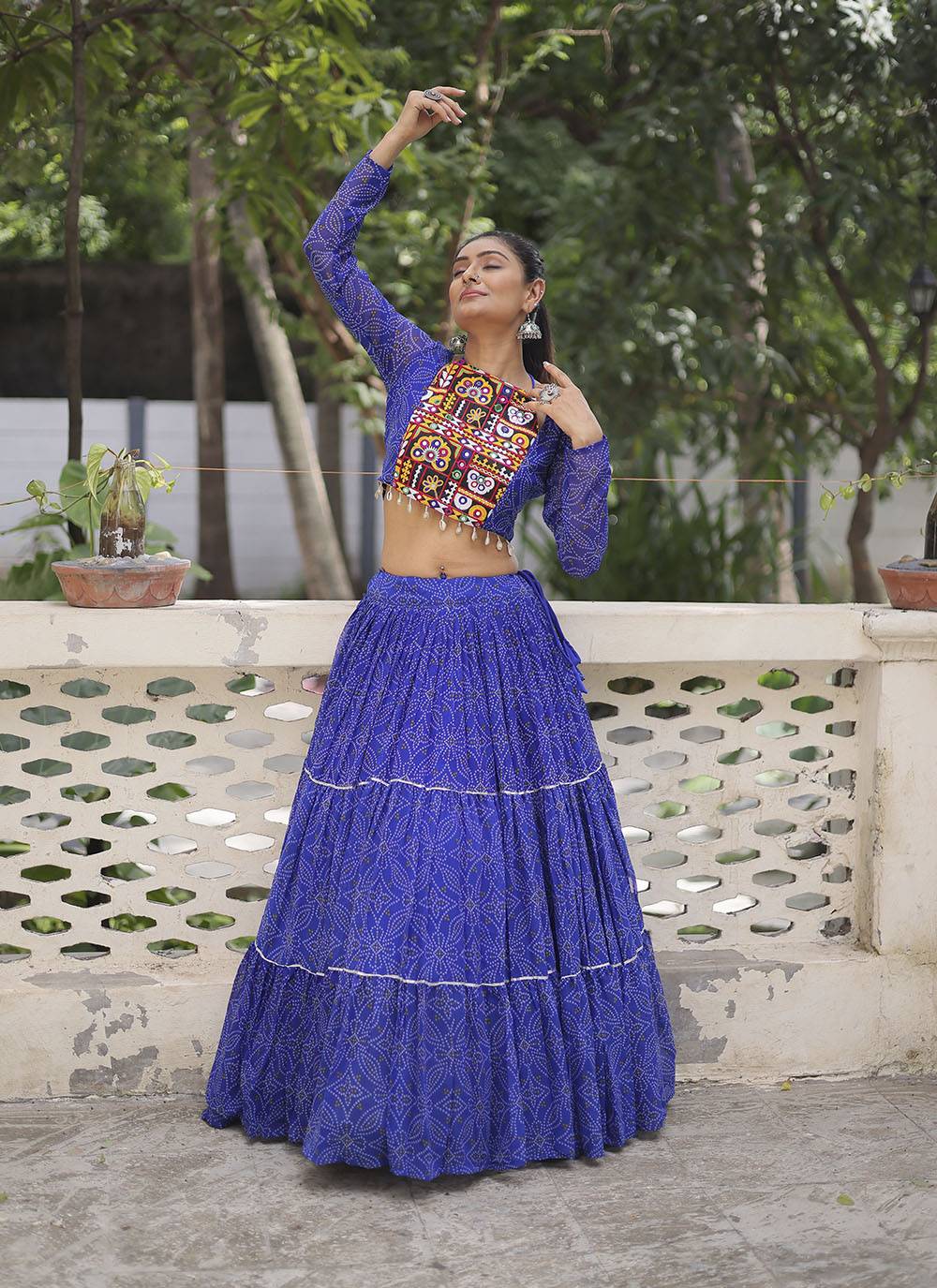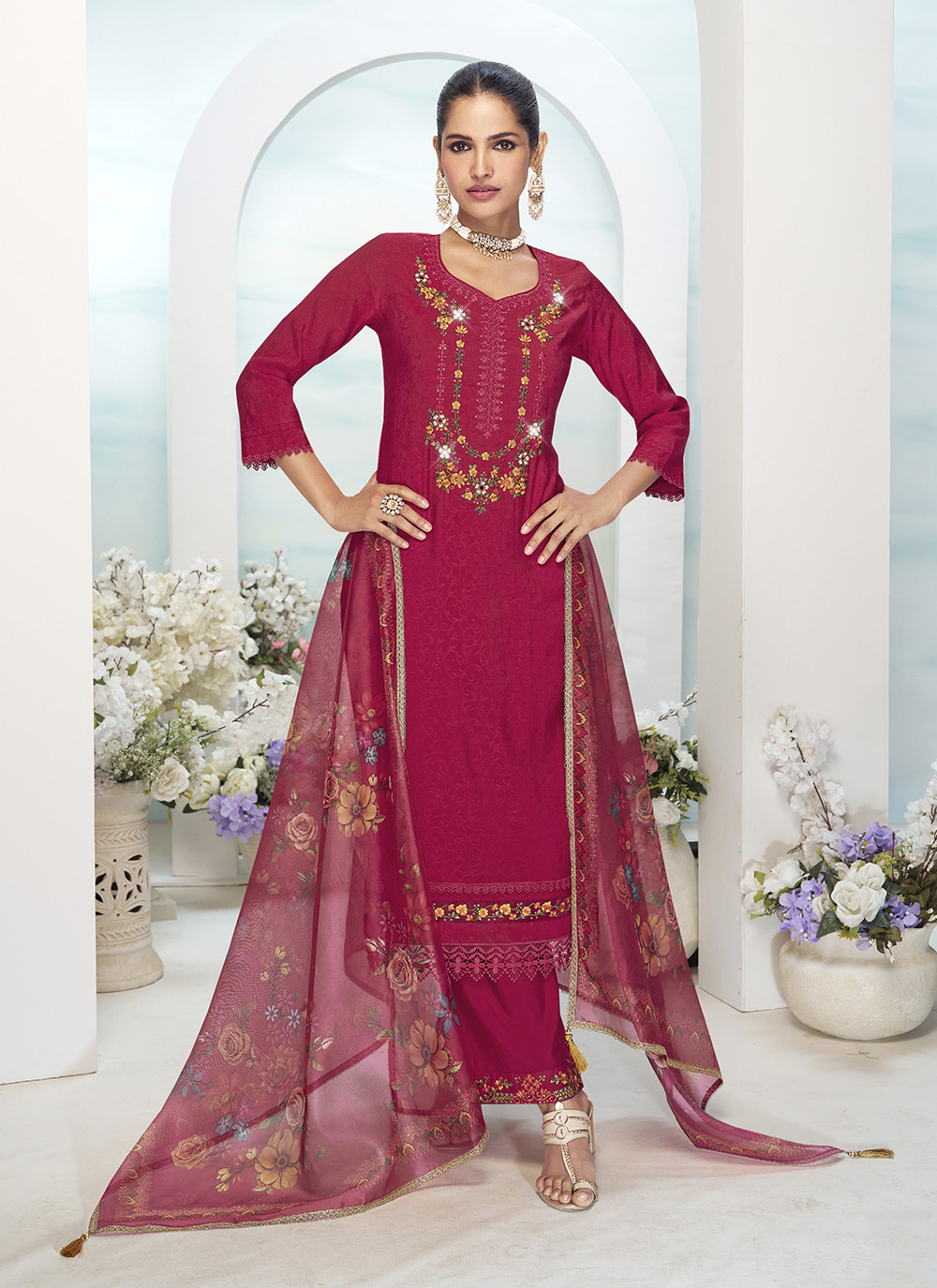
A Dubai atelier asked us last spring for 400 meters of a fourteen-colour floral on georgette, one delivery, no repeats. Engraving fourteen rotary screens for 400 meters would have wrecked the economics of the job before a single meter printed. It went to our digital line instead and shipped in under two weeks. That one routing decision is the whole subject of this post in miniature.
How the Two Processes Actually Work
In rotary screen printing, each colour in the design gets its own nickel cylinder, laser-engraved with that colour's artwork. The screens clamp onto a rotary machine in sequence, squeegees inside each cylinder push paste through as the fabric runs underneath, and a well-running line lays down thousands of meters an hour. Flat-bed screen printing uses the same idea with flat screens that lift and drop between lays, much slower, but tolerant of oversized repeats and heavy paste builds.
Digital printing has no screens at all. Inkjet heads travel across the fabric and fire the design straight from the artwork file, usually CMYK plus extra channels on better machines, orange and green for wider colour, sometimes white for dark grounds. What prints is what was drawn, pixel for pixel.
That single difference, artwork going to fabric with no tooling, drives everything else in this comparison: sampling speed, minimums, colour count and the shape of the cost curve.
The repeat maths nobody explains upfront
A standard rotary screen has a 640 mm circumference, which caps the largest vertical design repeat at 64 centimetres. Hard cap. If your designer draws a 90 cm repeating motif, you either shrink it, split it, or pay for larger-format screens, which exist up to about a metre but run on fewer machines with heavier set-up.
Digital has no repeat limit at all. A design can run unbroken the full length of the roll, which is why those continuous painterly sarees and ombre effects in designer drops are almost always digital. Repeat placement is its own skill: on a 2.5 meter dupatta with a border, repeats must land so the pallu end finishes on a complete motif rather than a chopped half-flower, and half-drop or mirror tiling has to close without a visible seam. A good print studio does this arithmetic at artwork stage. A careless one discovers it on the table, with your fabric on it.
Where the Economics Cross Over
We do not quote ink or engraving rates here, because those numbers move with the market, but the structure is stable and worth internalising:
- Rotary carries a fixed set-up cost per design, screens, engraving and machine changeover, which gets diluted over the run length. Long runs wash it out. Short runs drown in it.
- Digital carries near-zero set-up and a per-meter cost that stays flat no matter how few or many meters you print.
- Revisions are cheap on digital, it is a new file, and expensive on rotary, it is re-engraving affected screens and days lost.
- Colour count is free on digital and linear on rotary, where every colour is another screen, another alignment and another thing that can drift during the run.
So there is a crossover run length below which digital wins and above which rotary wins. In our experience it sits in the low thousands of meters for simple four to six colour designs, and much higher, sometimes never, for twelve-plus colour florals on sheer grounds. Below a few hundred meters, rotary is not a conversation at all, and any supplier quoting it cheerfully is padding something.
The second factor is time to first approved meter. Digital prints a strike-off within a day or two of receiving artwork. Rotary needs screens engraved first, typically three to seven days, before a single proof exists. On a trend-chasing programme, that week is often the whole decision.
Hand Feel, Penetration and the Back of the Fabric
Here is where buyers get surprised, and where we see the most claims. Rotary paste is pushed through the cloth by squeegee pressure, so on chiffon and georgette the design reads strongly on both faces. That matters enormously for dupattas and sarees, where the reverse shows in every drape fold. Digital pigment ink sits mostly on the face, so the back of a digitally printed sheer shows only a pale ghost of the design. Sometimes that is acceptable, on a lined garment for instance, and sometimes it quietly kills the product.
Reactive digital printing changes the equation: the ink bonds with the fibre like a dye and then gets steamed and washed off, giving a softer hand and a much better two-sided read, at the cost of an extra process step and the water usage that comes with it. For cotton lawns and premium viscose, it is usually worth it.
Then there are the effects digital simply cannot do. Khadi, the raised silicone and metallic paste work you see on premium kurtis, needs genuine squeegee pressure through a screen. So do foil, flock, high-density prints and most glitter pastes. Programmes that mix fine multicolour artwork with raised effects usually run as hybrids, digital base print with screen khadi laid on top, and that combination is one of the more useful things a Surat print floor can offer.
Speed, Lead Time and How We Split a Season
A rotary line at full speed out-produces a digital printer many times over once it is running, but rotary spends hours in set-up per design while digital starts immediately. For a typical export season we plan like this:
- Sampling and strike-offs: digital, always, with approval swatches in 48 to 72 hours.
- Designer drops, capsule prints and boutique orders under a few thousand meters: digital.
- Volume programmes, seasonal repeats and anything with khadi, foil or flock: rotary, with a digital strike-off approved first so nobody engraves screens against an unloved artwork.
- Dark grounds with photographic detail: digital with a white underbase, or discharge screen printing if the run justifies screens.
One honest admission from our side: digital is not the future of everything, whatever the machine vendors say. For a single design running season after season at high volume, rotary beats it on cost per meter and on penetration, and it will keep doing so. Digital wins on agility, and agility is only worth money when your assortment actually changes.
Frequently Asked Questions
Which is cheaper, digital or screen printing on fabric?
Below roughly the low thousands of meters per design, digital usually wins, because rotary's screen engraving and set-up costs have too few meters to spread over. Above that, rotary's speed wins on cost per meter. The more colours in the design, the further the crossover moves in digital's favour, since colour count costs nothing digitally but adds a screen each in rotary.
What does print repeat mean, and why does it matter?
The repeat is the vertical distance before the design pattern starts over. Standard rotary screens cap it at 64 centimetres, the screen circumference, so artwork has to be engineered to tile within that. Digital printing has no repeat limit, which is the only reason continuous, non-repeating designs exist commercially.
What is the minimum order for rotary screen printing?
Practically, most printers want enough meters per design to justify engraving every colour screen, and that number sits in the thousands rather than the hundreds. Digital has effectively no minimum, a single meter for sampling is routine, which is why short boutique runs route that way.
Can digital printing match Pantone shades exactly?
Approximately, not exactly. Digital builds colour from process inks, so it reaches a very wide gamut but can miss deep spot colours that rotary lays down as a matched screen paste. Where an exact corporate or brand colour matters, a screen-printed spot colour, or a dyed base with digital over-print, is the safer route.
Why does my digital print feel stiffer than the screen-printed version?
Pigment digital ink sits on the fabric surface and needs a curing fixation, which slightly firms the hand, especially on fine cottons and viscose. Reactive digital ink bonds into the fibre and washes out to a dyed-like hand, at the cost of a steaming and wash-off step. Ask which ink system a supplier uses before comparing swatches.
Which method survives washing better?
A properly fixed reactive print and a well-cured rotary print both hold up well. The usual failure points are cheap pigment systems under-cured to save time, and dark rotary grounds with heavy coverage that crock onto light trims. Wash a sample at 40 degrees with a white tester cloth before you commit a season to any print route.
If you have a print programme in the works, georgette saree lots, lawn drops, dupatta borders or a hybrid with khadi work, send us the artwork or even a rough mood. We will tell you which route fits the run length, where the repeat lands and what a strike-off will cost in days rather than adjectives. Serious buyers get sampling priority before peak season locks the machines.
Sourcing ethnic wear for your business?
Our export team shares catalogues, MOQ and pricing tailored to your market — response within one business day.