A cutting manager in Leicester once rang us about a bolt she had assumed was 60 inch and found, knife already poised, to be 44. Nothing was wrong with the fabric. Nothing was wrong with the order. The width was simply a different product for a different cutting table, and her marker plans for the day died on the spot. Width is the most under-specified line on a purchase order, and it decides more of your real fabric cost than GSM does.
The Widths You Will Actually Be Quoted
Indian and export trade condenses around three families. The first is 44 to 46 inch, roughly 112 to 117 centimetres, the traditional powerloom width that most of the Surat saree and suiting trade runs on. The second is 58 to 60 inch, about 147 to 152 centimetres, the garment-export standard for dress fabrics: georgettes, satins, viscose, linens and the bases used for abaya and thobe production. The third is 72 inch and above, 183 centimetres and wider, used for wide nets, organzas, home textiles and flowing garments where seams are the enemy.
Two notations trip up first-time buyers. When a supplier quotes "58/60", they mean the finished width will fall anywhere in that band, so your marker must plan for 58, not hope for 60. And when a quote says 60 inch, always ask whether that is cuttable width or overall width including selvage, because selvedges and pin marks eat one to two inches total on many processed goods.
The conversion nobody should get wrong
Buying in yards while being quoted in meters hides a silent nine percent. A yard is 0.9144 meters, so a 10,000 meter programme is about 10,936 yards. We have seen more than one small buyer discover, at invoice stage, that they had been comparing a per-yard quote against a per-meter quote and congratulating themselves on the difference.
Why 44 Inch Still Runs India
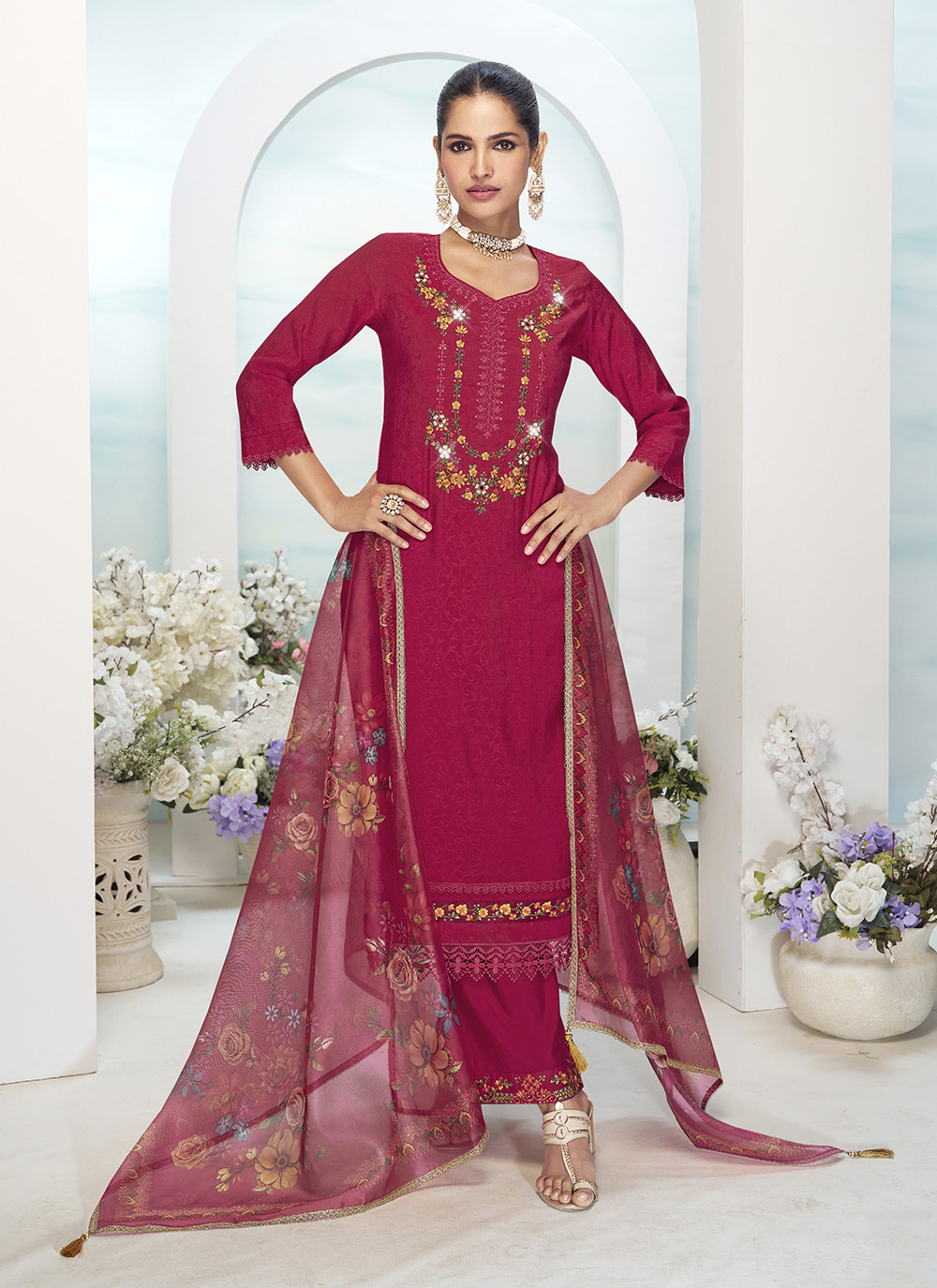
The narrow width survives because it is built for what India actually cuts. Sarees are woven to fall in the 44 to 46 inch band with borders and pallus engineered into the loom setup. Salwar kameez and kurti cutting works happily from 44 inches because the panels are modest: kameez fronts run along the length, sleeves cut across the width, and a dress material cut of 4.5 to 5 meters yields a full suit with a 2.5 meter dupatta.
It is also the width of habit in the domestic trade, meaning enormous capacity exists on narrow looms and the greige is plentiful and consistent. For dupatta programmes, for saree lots and for South Asian silhouette cutting, 44 inch is not a compromise. It is the correct tool.
The trouble starts when western silhouettes, particularly plus sizes, are cut from it. A US size 16 to 24 kurti or dress wants a front panel approaching 32 to 36 inches of usable width before seam allowances. On 42 usable inches that is one garment panel per lay position, sleeves crammed into the remainder, and marker efficiency falls apart. The same garment on 58 inch nests front and back side by side and the consumption per unit drops dramatically.
The 58/60 Inch Standard and Cutting Table Maths
The garment export world standardised on 58/60 because it was computed for exactly this: body panels plus sleeves nested in one width, on cutting tables that are physically built around 60 inch lays.
From our stitching unit's records, a straight-fit size L kurti in stable fabric consumes about 3.5 meters of 44 inch cloth and about 2.5 meters of 60 inch. Multiply that difference across a 5,000 unit order and the width decision has bought or burned hundreds of meters of fabric, before anyone mentions marker efficiency percentage. On sheer fabrics the gap narrows, because sheers nest loosely and slip on the lay anyway.
And a confession from our own early years: we once shipped a US plus-size programme on 44-inch suiting because the rate was attractive, and ate the recut. Every fabric desk makes that mistake exactly once.
For Gulf garment production the width question is even more direct. A kandora or thobe body wants a single panel cut full width, with no centre seam down the front, so 59 to 60 inch finished width is effectively a hard requirement, not a preference. Abaya A-line panels cut cleaner from 60 inch as well, and the flowing bell shapes of premium abayas push buyers toward 72 inch grounds where the volume of the skirt hem can be cut without joins.
Wider Goods: 72 Inch and Up
Wide widths run where seams show or where volume matters. Nets and tulles commonly come 72, 108 and even 118 inch wide, which lets a full-circle dupatta or a wide dupatta fall be cut in one unbroken piece. Organza and sheer overlay fabrics follow the same logic. Home textile programmes, table linens and runs of panelling, buy wide to avoid visible joins.
Wide goods carry their own cautions. They are harder to print in rotary at tight widths tolerance, they roll-build heavier, and a defect in the middle of a 118 inch net cannot be trimmed away without splitting the piece. Storage and handling need space that narrow-width habits do not have.
What Processing Does to Width Before You See It
Fabric shrinks in width during wet processing, and the number surprises people. A georgette woven at 46 inches in greige can finish at 42 to 43 inches after dyeing and stentering, because heat, tension and relaxation all pull the cloth in. Mills plan for this and weave wider, but that only works if the order specifies finished width rather than greige width.
So the rule on any purchase order is: state finished, usable width with a tolerance. Finished width 58 inches minimum, tolerance minus 1 centimetre, measured at three points across the roll under standard tension, is the kind of sentence that prevents disputes. We specify width at three points because fabric relaxes or stretches along the roll, and a single measurement at the cut end flatters almost every bolt ever woven.
One more connection worth making: GSM and width together set what a meter actually contains. A 60 inch fabric at 100 GSM carries about 40 percent more fabric per meter than a 44 inch fabric at the same GSM. Buyers comparing kilogram-based prices across widths without normalizing for this end up comparing unlike things, and the wider good often wins once the arithmetic is done honestly.
Frequently Asked Questions
What is the standard fabric width for garment export?
Most dress-weight export fabric runs 58 to 60 inches finished, which suits garment marker making and cutting table setups worldwide. Indian ethnic cutting and saree looms run 44 to 46 inches, while nets, organzas and home textiles go wider, 72 inch and up.
What does 58/60 mean on a fabric quote?
It means the finished width will fall somewhere between 58 and 60 inches, so planning must assume the lower figure. Your marker efficiency and panel placement should be built on 58 usable inches, with anything beyond that treated as a bonus rather than an expectation.
How much width does fabric lose during dyeing?
Depending on weave, tension and heat exposure, typically 5 to 8 percent between greige and finished width, which is why mills weave wider than the ordered finish. This is also why an order must specify finished width, since quoting greige width to a garment maker produces cloth that arrives too narrow for the lay.
Why is so much Indian suiting and saree fabric 44 inch?
Because the cutting it serves is built for it. Saree looms weave borders and pallus into narrow widths, dress-material cuts of 4.5 to 5 meters yield complete suits, and decades of powerloom capacity sit on 44 to 46 inch setups. For South Asian silhouettes it is efficient, and only becomes a problem when western plus sizes enter the range.
Which width should I buy for abaya and thobe fabric?
Finished 59 to 60 inch, without exception for thobes and kandoras, since the front body panel must cut in one piece with no centre seam. Premium flowing abayas move to 72 inch grounds for skirt volume. Specify usable width plus tolerance, and ask whether the quote includes selvedge.
Do I lose money buying 44 inch fabric for western-size garments?
Generally yes, above about size 14. Panel nesting on 42 usable inches forces one body panel per lay position and poor marker efficiency, so consumption per garment climbs. The same garment on 58/60 inch typically cuts 25 to 30 percent fewer meters, which usually more than offsets the difference in fabric rate.
If you are planning a programme and unsure which width your cutting table actually needs, send us the garment sizes and the style sketch. We will lay out the marker maths before you commit meters. Serious buyers can also get width-verified sample yardage, measured at three points, before the bulk order runs.
Sourcing ethnic wear for your business?
Our export team shares catalogues, MOQ and pricing tailored to your market — response within one business day.