Fabric Sourcing from India for Qatar — Surat Mill-Direct Export
Fabric Sourcing from India supply for Doha souq traders — mill-direct from Surat with shade-matched lots, festival-calendar planning and full export documentation via Hamad Port in Mesaieed.
Sourcing fabric for Qatar comes down to one decision: who you can trust with a season. Catalogues look similar, quotations look similar, and then the first container arrives — and that is when the difference between a mill and a middleman shows up in the shade, the meterage and the paperwork.
We supply Doha souq traders, hotel linen contractors, abaya boutiques and uniform suppliers. Qatari orders favour premium silks, deep-black abaya bases, hotel-grade linens and couture-quality embellished yardage for the wedding circuit.
What Qatar buyers order from this desk
- Direct sourcing from India’s weaving capital with mill-level transparency
- Sourcing programmes structured around Indian production realities — honest lead times
- Sample and development cycles run from India without third-party markups
- One Indian sourcing relationship replacing a chain of regional traders
- Qatari buyers pay for reliability — a Doha boutique would rather reorder from a mill that shipped clean three times than save margin on a new unknown supplier.
How our Qatar programme works
A high-margin market where buyers prioritise consistent quality and premium finishing over bargain pricing — and that shapes how we ship into Qatar. Sourcing fabric from India is a decision about where your margin lives — the same programme sourced direct from an Indian mill carries a cost structure intermediated sourcing cannot match.
- Consignment sizes that fit real Qatar businesses — from trial lots for boutique testing to full season volumes for chains
- Shade and GSM held stable across repeat orders, so your cutting floor never re-adjusts mid-season
- Direct-from-mill supply — the price you get is not padded by two layers of traders
- Export documentation prepared in-house and formatted for Hamad Port in Mesaieed clearance
- A WhatsApp-first export desk that replies in working hours — usually within a couple of hours, not days
The range we ship to Qatar
- Material fabrics: cotton, linen, silk, viscose, polyester, chiffon, georgette, crepe, satin and fifty further constructions
- GCC apparel bases: abaya, thobe, kandora, kaftan, hijab and sheila fabrics in the muted Gulf palette
- Prints: digital and rotary printing on viscose, crepe, georgette and silk bases
- Custom builds: your construction, your width, your shade card, your finish
- Programme supply: scheduled monthly dispatches with reserved loom capacity
Shipping to Qatar — the practical details
Every Qatar order ships with complete export documentation — commercial invoice, packing list and certificate of origin as standard. Sea freight runs via Hamad Port in Mesaieed; air freight covers festival windows when the calendar tightens. Payment terms are discussed openly at enquiry stage, with the first orders running on advance or LC structures and relaxing as the relationship settles. Demand moves with Ramadan, Eid al-Fitr and Eid al-Adha, plus the wedding season from November to March — our production calendar reserves capacity ahead of those windows.
What a first fabric sourcing from india order looks like
The entry path is deliberately low-risk: an enquiry with your quantity range, a video walk-through of current stock and catalogues, then physical samples of the shortlisted pieces. First orders typically run 20–50 pieces per design mixed across sizes and colours for garments, or 500–1,000 metres per shade for fabric programmes — enough to test the shelf without warehousing a season. The buyers who scale fastest treat the first order as a market test: they watch which designs move in the first fortnight, then use our mixed-lot structure to reorder the winners in depth while dropping the slow movers quietly.
Repeat programmes run on reserved capacity. Once a Qatar buyer confirms a seasonal programme, we hold loom and finishing slots against their calendar, keep their shade standards on file, and dispatch on a schedule their merchandising can plan around — the difference between a supplier who ships and a partner who plans.
Talk to us about your fabric sourcing from india qatar requirement
Tell us what your programme needs — constructions, weights, volumes and the retail window you are buying for. We come back with availability, indicative pricing and a realistic dispatch date, and buyers are welcome to verify quality with a trial lot before scaling up.
Fabric Sourcing from India for Qatar — what our mill-direct programme covers
The fabric programme behind this page is mill-direct Surat supply — weaving, dyeing, printing and finishing under one accountable desk, serving Qatar with the construction discipline that serious fabric buyers audit for. We develop and run natural fibres, regenerated cellulose, synthetics and the blend families between them, across the weight bands and finishes the trade actually specifies.
What that means practically: cotton programmes from voile-light shirting through canvas-heavy utility weights, silk and art-silk registers for the premium trade, the full polyester and nylon range from challis to technical constructions, and the fashion fabric families — georgette, crepe, satin, velvet, organza, jacquard, brocade — that garment programmes cut from. Printed, dyed, embroidered and textured finishes run on the same programme.
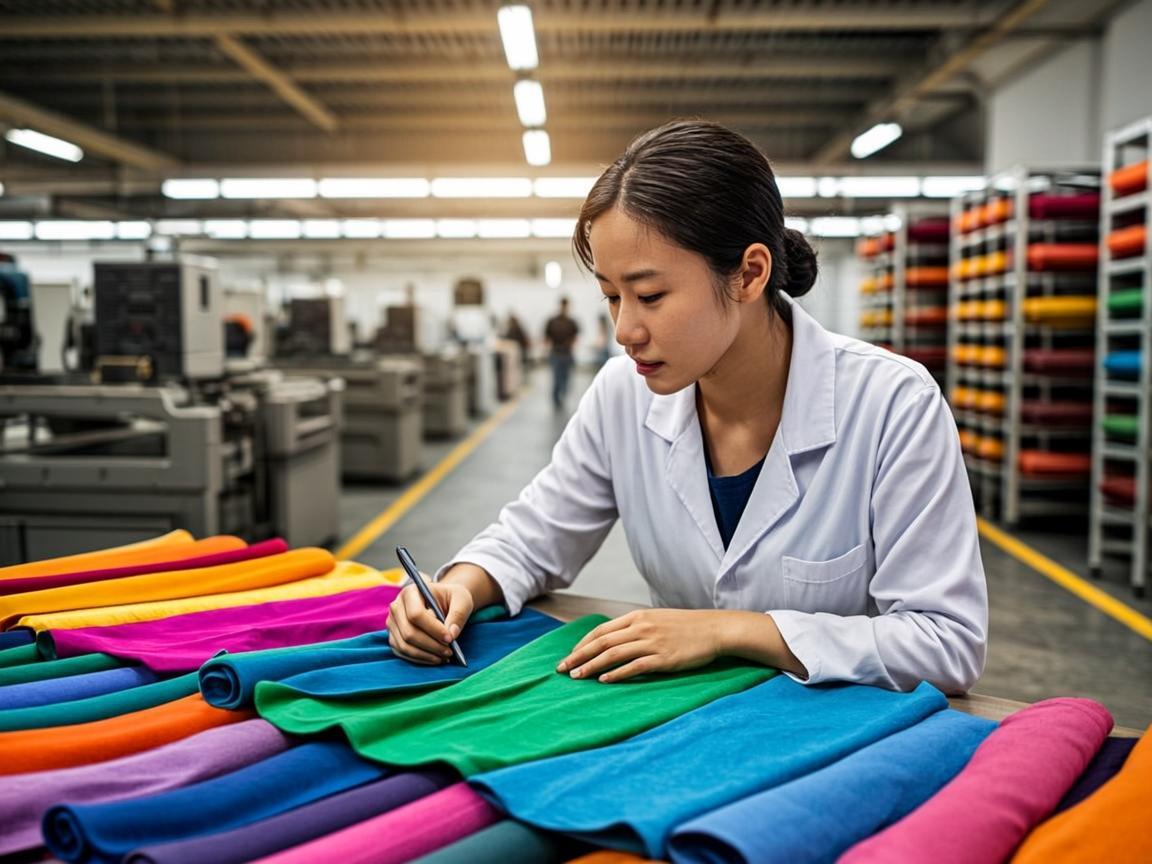
Bulk fabric supply runs on spec discipline: GSM tolerances held across the run, shade cards matched and archived per buyer, width options in the trade standards, and lot-level documentation that travels with the shipment. Development sampling moves in days because the clusters are local — the speed advantage that built this city's fabric trade still shows up in every programme we quote.
- Cotton fabrics — the workhorse range
- Silk fabrics — premium register
- Georgette, chiffon and crepe — drape family
- Printed fabrics — print cluster collections
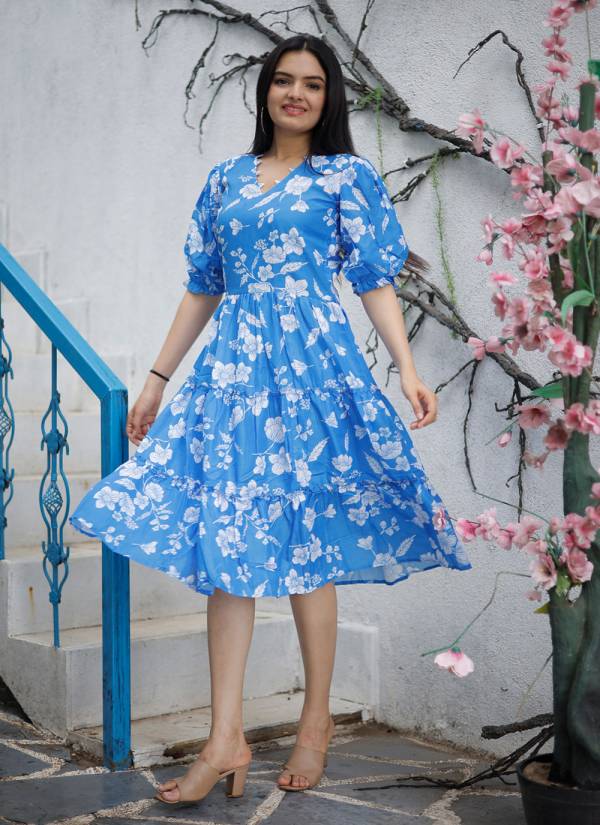
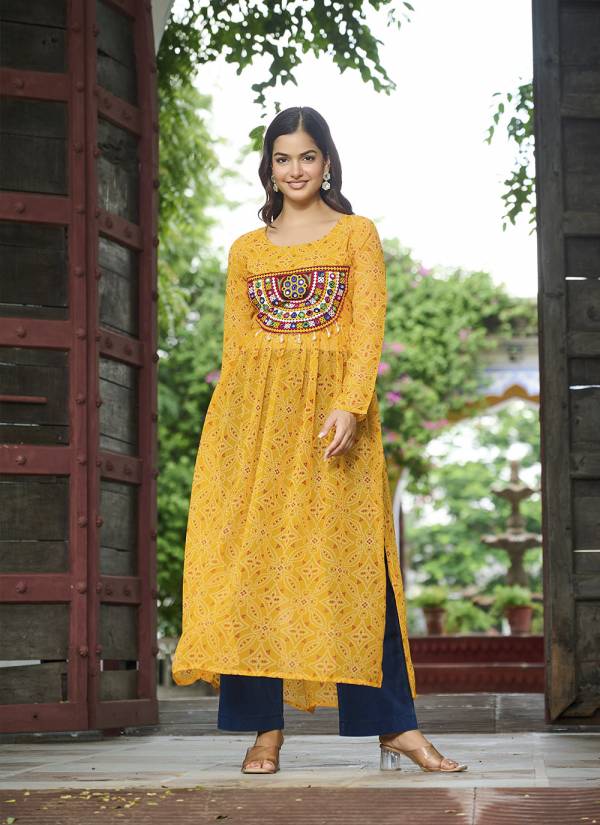
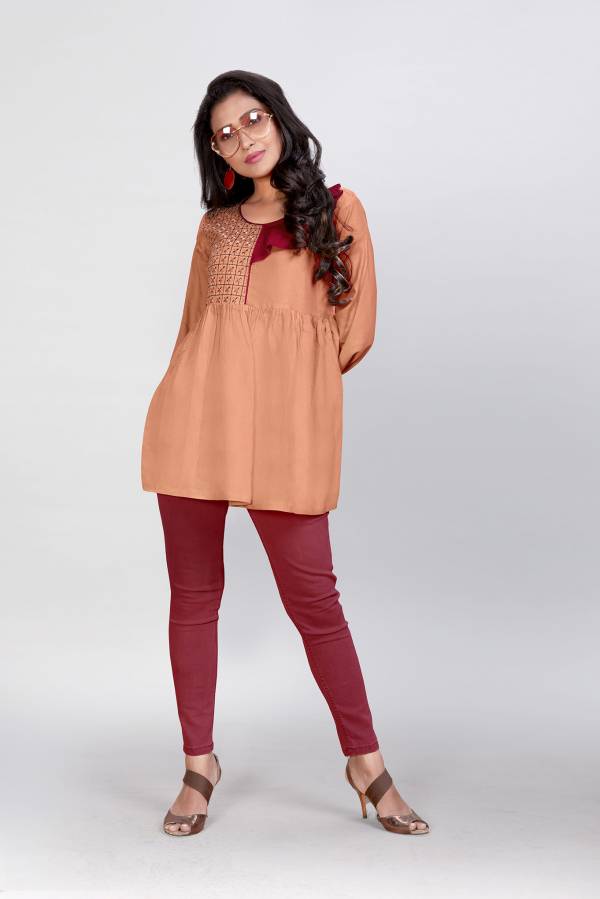
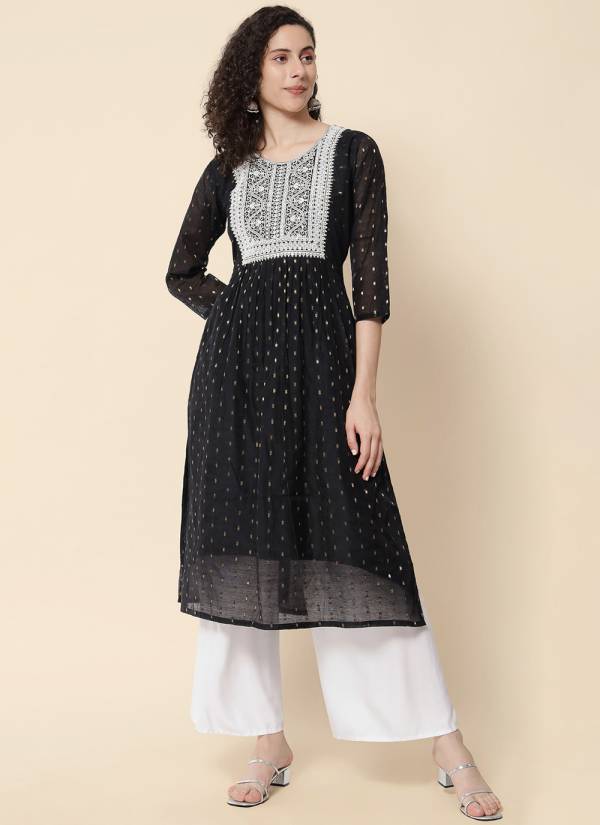
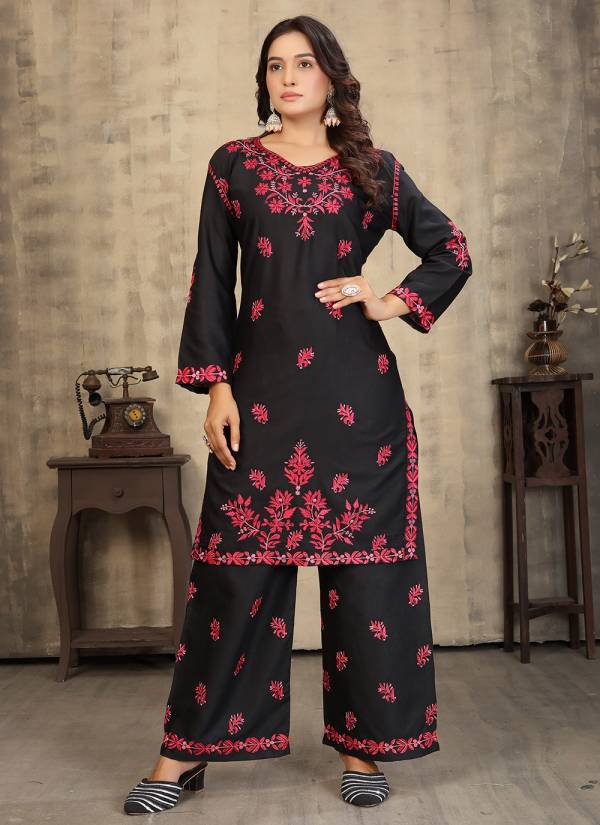
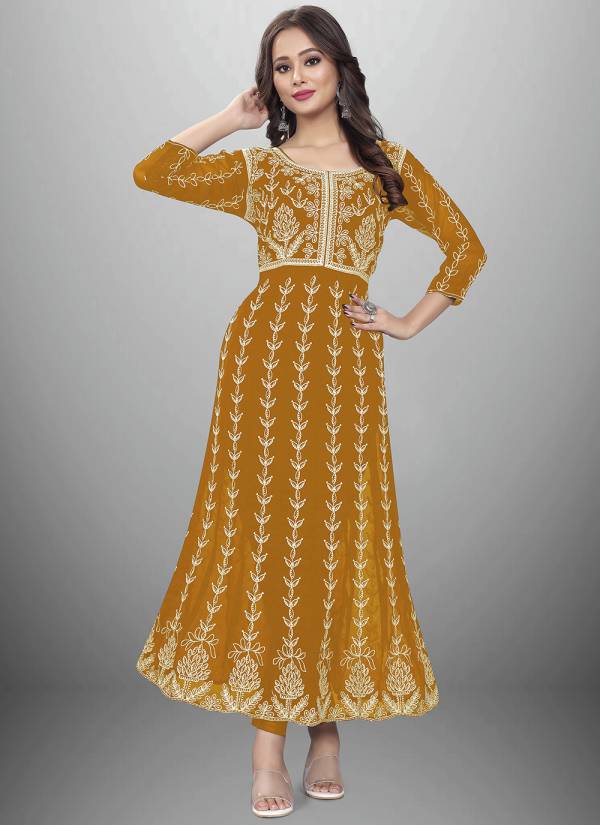
- Finished garments — what the fabric becomes
Fabrics behind the range
Fabric engineering is weight, weave and finish discipline:
Cotton from 80 GSM voile to 220 GSM canvas, on plain, twill, satin and dobby constructions. Silk from 40 GSM chiffon through 120 GSM dupion. The polyester and viscose families across their full weight range, chosen where drape and cost discipline matter more than fibre romance. Then the fashion registers — georgette, crepe, satin, velvet, organza, jacquard, brocade — each with its own GSM band and finishing behaviour that decides how the end garment actually performs.
Every programme we quote is built on a specified construction, not a fibre name. "Cotton fabric" tells a buyer nothing until the GSM, weave and finish are attached — which is why our quotations run on spec sheets, and why the sampling stage exists: your hand on the cloth beats any description we could write.
The Surat advantage — a short history
Surat's textile economy runs on proximity. Within a short drive of any finishing floor in the city you can reach spinning sources, weaving sheds, dyeing and printing process houses, embroidery units, stitching units, label printers, carton makers and the freight forwarders who consolidate all of it into export containers. Other textile cities have some of these layers; Surat's advantage is having all of them, at scale, competing with each other on turnaround.
The city earned that stack one decade at a time. Handloom weaving families industrialised into powerloom cooperatives through the mid-1900s. The polyester boom of the 80s and 90s pulled in process houses and printers. The embroidery boom of the 2000s added computerised multi-head machines by the thousand. Each wave trained a workforce the next wave hired, which is why the city's average textile worker today is multi-skilled across processes that would be separate trades elsewhere.
For buyers, the practical result is developmental speed. A concept reaches a counter-sample in days, a strike-off within the week, and a production slot follows the approval rather than the calendar quarter. We build our export programmes on exactly that responsiveness, and we think the history matters because it explains the mechanics behind the promise.
About Ajmera Export — the brand behind this page
Behind this page is a Surat export desk that has spent years learning what international buyers actually get judged on by their own customers. Landed-cost surprises kill retail margins. Late festival arrivals kill a whole season's plan. A shade drift between the sample and the bulk kills trust permanently. Our systems are built backwards from those three failure points.
Ajmera Export consolidates manufacturing and finishing across Surat's clusters into programmes that behave predictably: approved strike-offs before bulk runs, lot-level shade discipline, staged quality inspections with reports that travel with the shipment, and documentation packs that clear customs without follow-up. The desk runs on MOQ structures that let smaller buyers grow into larger ones without renegotiating the relationship each time.
We are a family-trade company in a city where that still means something — the reputation economics of a close-knit merchant community apply. Shortchange a buyer once and three others hear about it at the next trade sit-down. That pressure suits us fine, because the way we work anyway is the way that pressure enforces: honest specs, honest timelines, honest claims handling.
Why businesses choose us
- Family-trade accountability in a merchant community where reputation travels faster than marketing
- Honest lead times quoted against real machine capacity, not sales optimism
- Archived buyer files — reorder a programme a year later and the spec is still on record
- Export documentation pack prepared before vessel sailing, so clearance never waits on paperwork
- One consolidated invoice across categories, from fabric yardage to finished garment programmes
Start your first order
Begin with a straightforward enquiry: category, target quantity band and your market. From there we map the programme — which constructions or styles to sample, what MOQ the first order runs at, and what the production calendar looks like against your launch or season date. Counter-samples move within days, and nothing enters bulk production until you have approved the physical sample in hand.
Use the enquiry form on this page or message the desk on WhatsApp — both reach the people who actually run the programme. Buyers consolidating multiple categories can plan one shipment calendar across all of them, which is where the freight economics of a single-supplier relationship really start to show.
Featured Range
Products for Qatar